
Turkish Bread (Easy No-Knead Recipe)

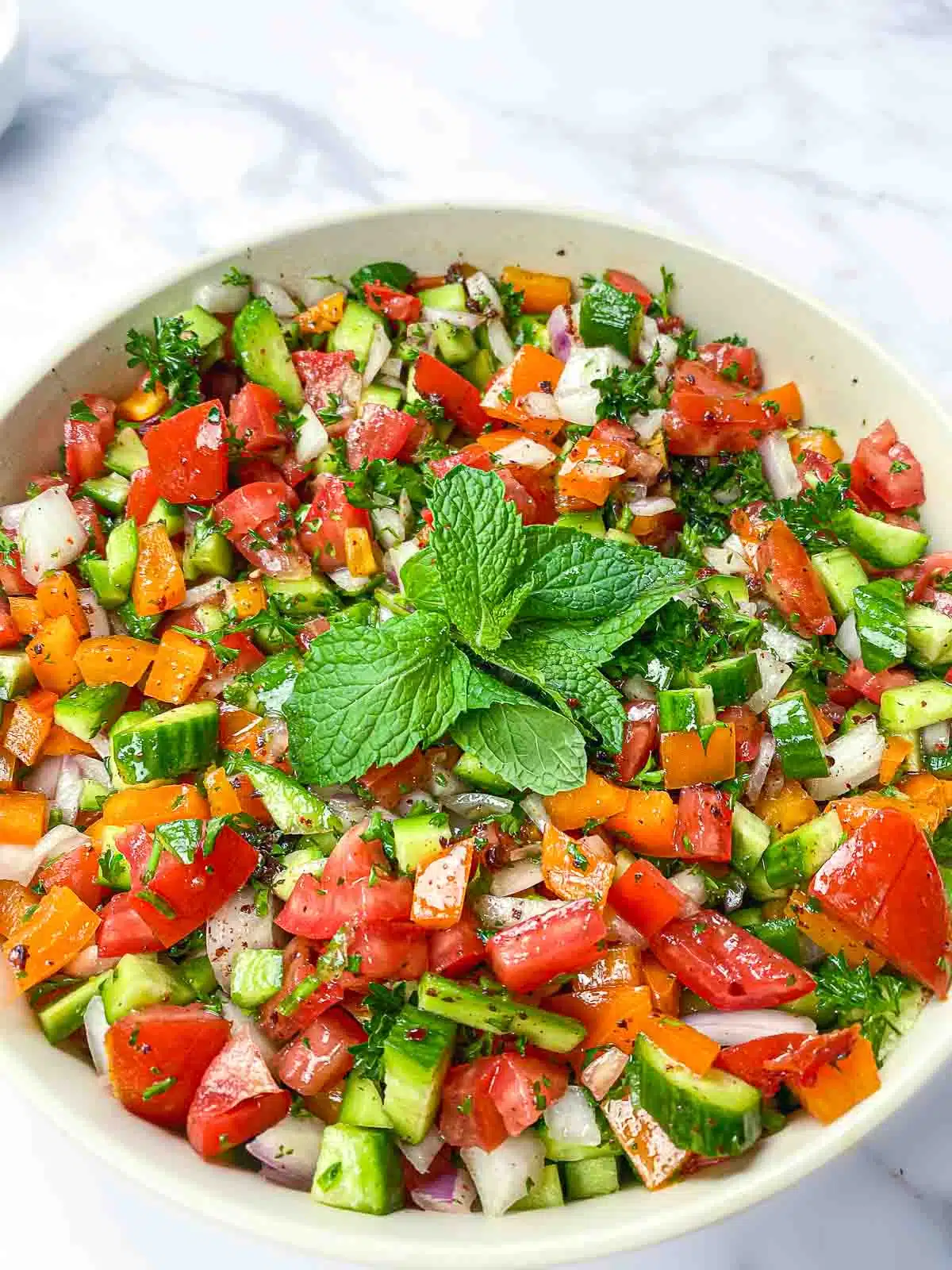
Make this easy no-knead Turkish bread recipe in under two hours. This bread is soft, fluffy and has a beautiful crisp golden crust. In Turkey, this flat bread is known as Ramadan Pidsi. But you can enjoy this Mediterranean bread year around. My favorite Turkish pairings include shepherd salad, piyaz and ezme. This recipe is a must-try for bakers of all levels!

Turkish flatbread is a cuisine in it’s own right! With more than a dozen different recipes, Ramazan Pidesi might be the most famous! While associated with Ramadan, this Turkish bread is baked around.
Now let’s talk about the important stuff… texture and flavor! Ramazan Pidesi has a golden crust that is topped with sesame seeds. The seeds give it extra texture and a bit of crunch. This is contrasted by the sweet, fluffy, and chewy interior. Combined, it is easy to see why this is the most famous Turkish bread!
If you are nervous about making bread, this is the perfect recipe to start with. The dough is forgiving and the process is simple (did I mention it is a no-knead bread recipe?). When it’s done, you can enjoy it with Turkish classics like spicy ezme dip or shepherd’s salad. You can also pair it with a cold cucumber soup, creamy mushroom soup or a simple olive oil and vineger bread dip. That’s how versatile this bread is. It goes with everything!
Prep Time
1 Hour and 15 Minutes
Total Time
1 Hour and 35 Minutes
Skill Level
Easy
Beginner
Diet
Vegan
Vegetarian

Turkish Bread During Ramadan
Ramadan Pidesi is a Turkish flat bread closely associated with Ramadan. It is often eaten as the before the sun rises and at Iftar when the sun goes down and the fast is broken. This bread is easily made in homes or purchased a local bakeries all over Turkey.
In the early 2000’s I was fortunate to be in Turkey during Ramadan. As soon as the call to prayer happened, people insisted on sharing their Turkish bread with me. The desire to share came from the pure joy and happiness of Ramadan. I find it hard to explain how festive Ramadan is in Turkey. But I can tell you that for me, it was a truly magical experience that I will always cherish!

Key Ingredients for No-Knead Turkish Bread
Instant Dry Yeast
You need active yeast for the dough to rise. When you buy yeast it is alive, but the longer it is stored it will lose its activity. Before using yeast, you want to always check the expiration date. If it is expired, you will need to buy a fresh pack.
Sesame and Nigella Seeds
Sesame and Nigella seeds are the classic toppings of this Turkish bread recipe. If you do not have them, you can substitute with poppy seeds or omit seeds all together.
Sugar
You need sugar to activate the yeast. But with this recipe, sugar also makes the bread slightly sweet.
Warm Water
You will need warm water to activate the yeast. The ideal temperature between 95°F (35°C) and 105°F (40.5°C). If you do not have a thermometer, run the water until it is warm on your wrist. Note that if the water is too hot, it will kill the yeast, and if it is too cold, it will not activate it.
See the recipe card for a complete list of ingredients and measurements.
Readers Also Liked


Step-by-Step Instructions
Step One: Activate the Yeast
- Place the warm water in a large bowl.
- Add the sugar and mix to dissolve.
- Sprinkle the yeast on top of the water.
- Set aside 7-10 minutes for the yeast to activate.

Step Two: Mix and First Rise
- Whisk flour and salt together.
- Add flour to the yeast/water combination and mix it together with a wooden spoon. The dough will look rough and shaggy
- Cover with plastic wrap or a damp towel. Set aside for 30 minutes or until the dough doubles.

Step Three: Shape
- Fill a small bowl with water and dip your fingers in the water.
- Think of the dough as a clock. Reach your hand under at 3 o’clock, lift, and pull the dough over to 9 o’clock.
- Turn the bowl 90 degrees and repeat three more times.
- Generously flour a work surface and place your dough on it.
- Using your hands, shape the dough into a ball and place it on a baking sheet lined with parchment paper.
- Loosely cover plastic wrap that has been lightly oiled for five minutes.


Step Four: Second Rise
- Preheat the oven to 400F/200C.
- Uncover and move the dough ball to a parchment-lined baking sheet.
- Pat into a round shape about 6 inches in diameter and about ½ “thick.
- Gently press to pop any air bubbles that have formed.
- Take a fresh piece of plastic wrap, coat it with olive oil, and cover the dough for an additional 30 minutes.

Step Five: Design
- Dip your fingertips in olive oil and make indents around the perimeter.
- Repeat making the same indents 3-4 times.
- Use your fingertips to make three rows across the dough. Repeat the same indents 3-4 times.
- Turn and create three rows going across the first set of rows. Repeat the same indents 3-4 times.
- Lightly brush or spray the top of the dough with olive oil. Sprinkle white and black sesame seeds on top.


Step Six: Bake
- Place baking sheet with the dough in the middle of the oven rack. Bake at 400F/200C until golden on top, about 18-20 minutes.

Watch Instead
Frequently Asked Questions

If you tried this Turkish bread recipe or any other recipe on my blog, leave a star rating and let me know how it went in the comments below.
Turkish Bread (Easy No-Knead Recipe)
Equipment
- 1 Large bowl
- 1 Medium bowl
- 1 small bowl
Ingredients
- ½ cup + 2 tablespoons warm water (between 95 and 105 degrees)
- 1 and ½ teaspoons sugar
- 1 and ½ teaspoons instant dry yeast
- 1 and ½ cups (180g) all-purpose flour
- ½ teaspoon salt
- 1 tablespoon olive oil
- ½ teaspoon white sesame seeds
- ½ teaspoon black sesame seeds
Instructions
- Mix Ingredients – Place the warm water in a large bowl. Add the sugar and mix to dissolve. Sprinkle the yeast on top of the water. Set aside 7-10 minutes for the yeast to activate. In the meantime, sift or whisk flour. Add the salt, and whisk to evenly distribute the salt. Add flour to the yeast/water combination and mix it together with a wooden spoon. The dough will look rough and shaggy
- First Rise – Cover with plastic wrap or a damp towel. Set aside for 30 minutes or until the dough doubles.
- Shaping – Fill a small bowl with water and dip your fingers in the water. To lift the dough begin as if it were a clock, reach your hand under at 3 o'clock, lift and pull it over to 9 o'clock. Turn the bowl 90 degrees and repeat 3 more times. Generously flour a work surface and place your dough on it. Using your hands, shape the dough into a ball. Place the dough onto a baking sheet lined with parchment paper. Loosely cover plastic wrap that has been lightly oiled for five minutes. This step gives the gluten time to relax.
- Second Rise – Preheat the oven to 400F/200C. Uncover and move the ball to a parchment-lined baking sheet. Pat the ball into a round shape about 6 inches in diameter and about ½“ thick. Gently press to pop any air bubbles that have formed. Take a fresh piece of plastic wrap, coat it with olive oil, and cover for an additional 30 minutes.
- Design – Dip your fingertips in olive oil and make indents around the edge of the dough. Repeat making the same indents 3-4 times. This helps the indentation hold its shape. Use your fingertips to make three rows across the dough. Repeat the same indents 3-4 times. Turn the baking sheet and create three rows in the other direction. Repeat the same indents 3-4 times. Lightly brush or spray the top of the dough with olive oil. Sprinkle white and black sesame seeds on top.
- Bake – Place baking sheet with the dough in the middle of the oven rack. Bake at 400F/200C until golden on top, about 18-20 minutes. In my oven, the bread often cooks unevenly. I rotate the bread as needed to achieve an even golden color.
Notes
- Countertop Instructions: Wrap the bread in plastic wrap and store it in a cool, dry place for up to two days.
- Freezer Instructions: Place the bread in a freezer-safe bag, and store it in the freezer for 2-3 months. To thaw, remove it from the freezer and let it sit at room temperature for a few hours or overnight. Once it has thawed completely, reheat it in a preheated oven at 350°F (175°C) for 5-7 minutes to restore its texture.


SO YUMMY! my whole family loved.
Hi Lae, I am so happy you and your family liked this recipe. Ramadan Pidesi is one of my favorite breads. So easy and has SO much flavor! Thank you for leaving a comment <3
This sounds so good. I will be trying this nenexweek. Thank you so much.
Cindy, let me know how it turns out.